
The India AI Impact Summit 2026 in New Delhi was more than just a gathering of technologists, policymakers and industry leaders , it was a statement about where the world’s fastest-growing AI ecosystem is headed. With commitments totaling over $200 billion in AI infrastructure, partnerships with global companies, and national strategies focused on inclusion, workforce transformation, and AI for social good, India is asserting its role as a global AI hub.
But as strategic ambitions scale, so too do the risks and governance challenges associated with deploying AI systems responsibly. These challenges range from model transparency and data provenance to security vulnerabilities and ethical compliance all of which have implications for national security, citizen safety, and public trust. It’s exactly in this context that the newly published CERT-In Technical Guidelines on SBOM, QBOM, CBOM, AIBOM, and HBOM, part of India’s national cybersecurity framework, become deeply relevant.
From Investment and Innovation to Real-World AI Risks
At the Summit, national leaders emphasized the transformational role of AI, not just as a technology but as an economic and societal force. Simultaneously, global players like OpenAI and Microsoft are anchoring major compute and infrastructure commitments in India, signaling confidence in large-scale AI deployment.
Yet amidst this progress, discussions at the Summit also accentuated themes that echo the core motivations behind AIBOM:
- AI as a public good, equitable and inclusive in design
- Transparent governance and ethical accountability
- Safe deployment at scale across sectors
These aren’t abstract ambitions; they are operational challenges that AI practitioners, enterprises, and governments are already grappling with.
Understanding AIBOM: Why It Matters Now
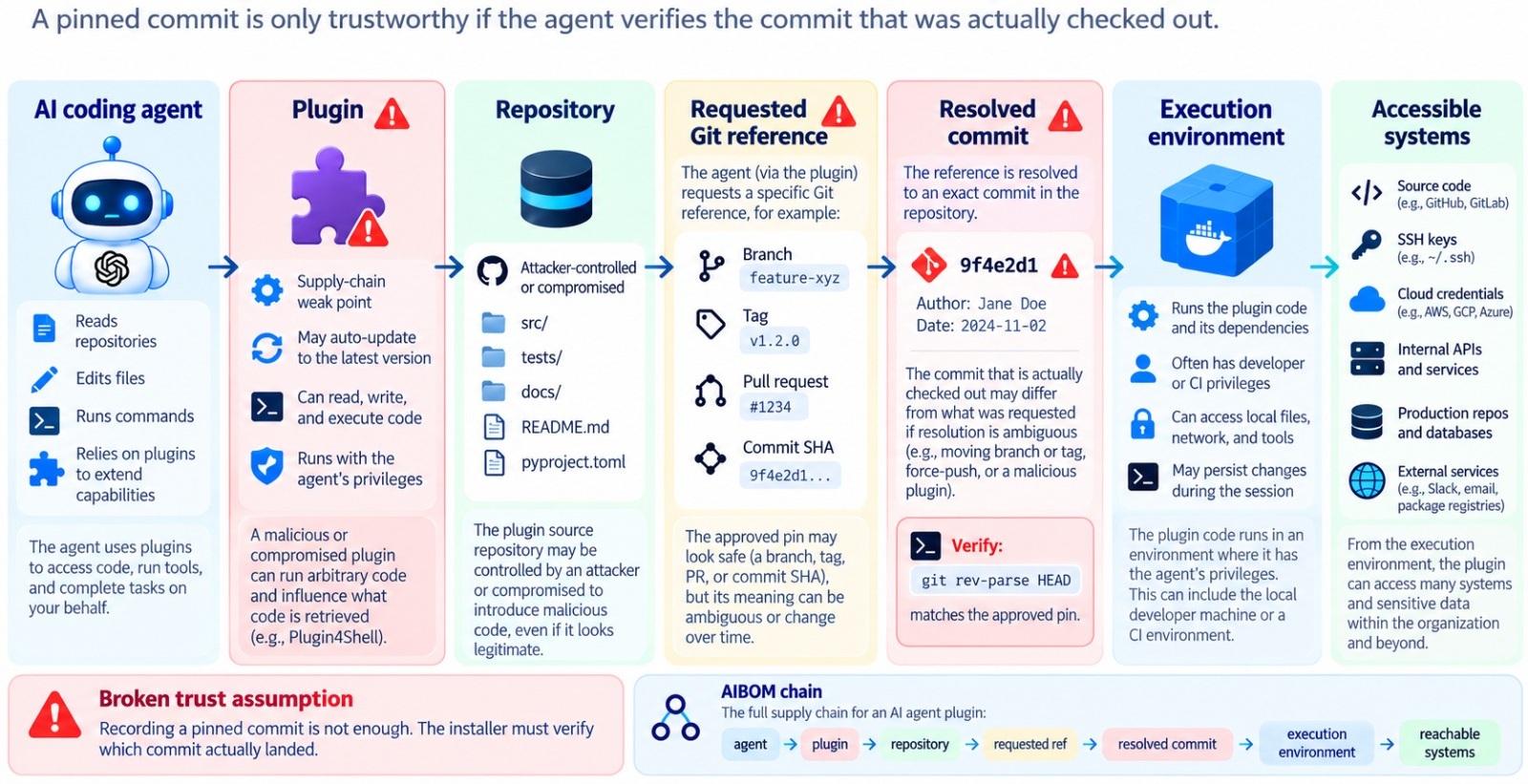
The CERT-In Technical Guidelines define an Artificial Intelligence Bill of Materials (AIBOM) as a comprehensive list of all components used in building, training, and deploying an AI model including software dependencies, hardware, datasets, training parameters, versions, and security attributes.
In traditional software supply chains, Software Bill of Materials (SBOM) has become a cornerstone of cybersecurity and transparency. However, AI systems introduce dimensions far beyond static software:
- Dynamic training data sets
- Model architectures and version histories
- Inference pipelines with third-party dependencies
- Deployment environments and platform interdependencies
An AIBOM captures all these elements providing a structured inventory of AI assets that:
- enables traceability across the lifecycle of AI models
- strengthens security through vulnerability visibility
- supports compliance with ethical, legal, and regulatory standards
- enhances reproducibility and risk management across stakeholders
This visibility is foundational to responsible AI governance, especially in public sector deployments and critical infrastructure.
AIBOM: From Guidelines to Practice
The CERT-In guidelines clearly articulate that an AIBOM should include not just the list of components, but metadata, such as:
- Model versioning and architecture
- Data source provenance and licensing
- Intended use cases and out-of-scope definitions
- Security assessments and known vulnerabilities
- Deployment environment dependencies and lifecycle events
This level of disclosure — when standardized, machine-readable, and integrated into development lifecycles — transforms AI teams from opaque black-boxed builders into governable, auditable system creators.
The OWASP AIBOM Project
In this evolving regulatory and innovation landscape, the OWASP AIBOM Project serves as a critical enabler for operationalizing the principles outlined by guidelines such as CERT-In. As an open, community-driven initiative under the broader OWASP Foundation, the project aims to provide practical guidances, best practices to help organizations generate standardised, machine-readable AI Bills of Materials. By translating high-level governance requirements into implementable technical frameworks, OWASP AIBOM bridges the gap between policy and practice empowering AI developers, security teams, and regulators to embed transparency, traceability, and supply-chain risk management directly into AI development lifecycles.
Follow the OWASPI AIBOM Project updates on: LinkedIn and join and contribute here: https://owaspaibom.org/join-and-contribute/