
Overview
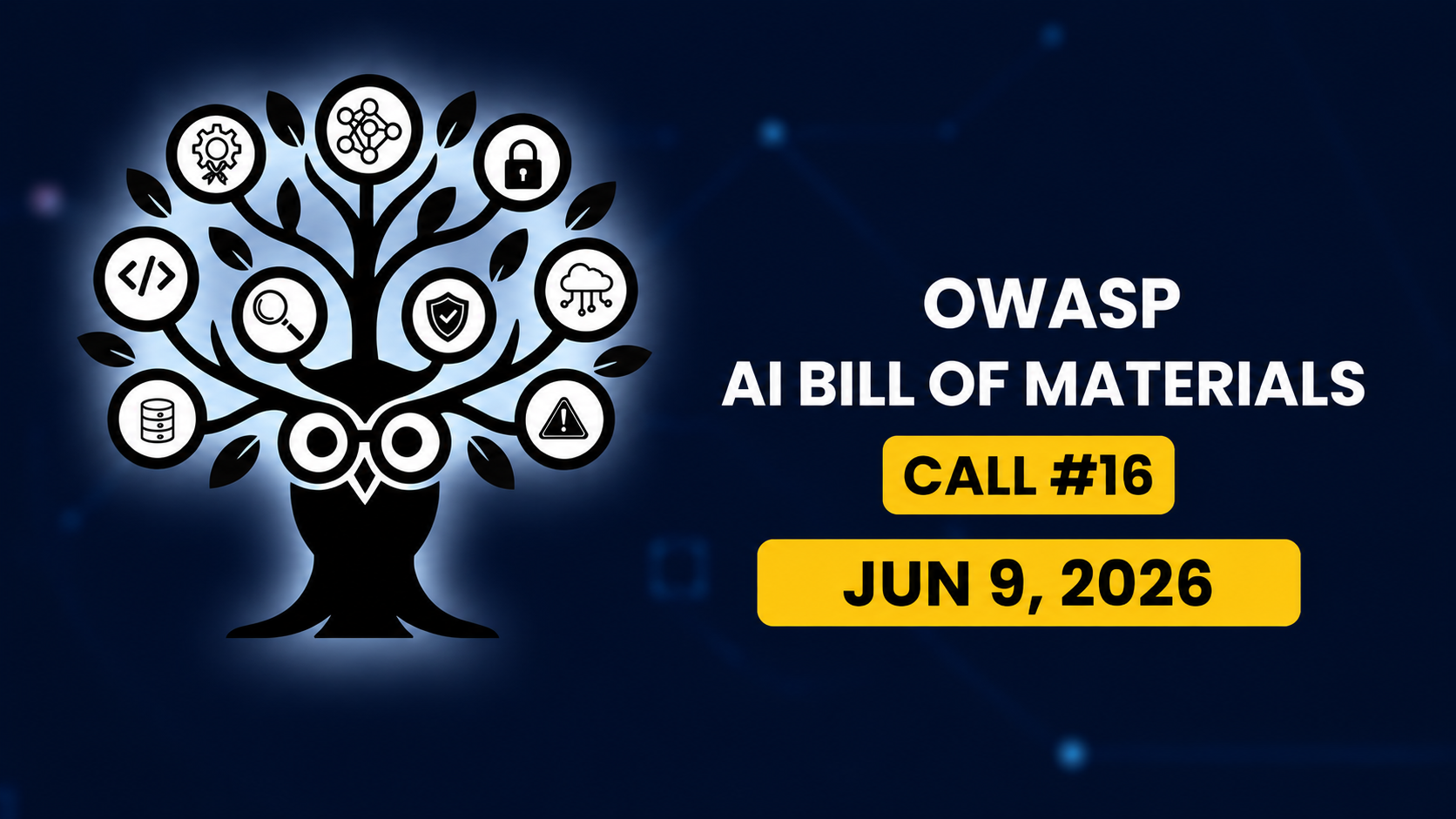
The OWASP AIBOM Call #16 focused on Phase 2 execution, continued community growth, upcoming project deliverables, and increased activity across content, conferences, sponsorships, and collaboration.
Major updates included progress on the AIBOM 101 guide, continued expansion of the Policy and Threat Intelligence workstreams, planning for sponsor-led content and a potential Prediction Guard workshop during DEF CON week, and growing collaboration with universities and industry partners. The project also continued tracking conferences, publishing educational content, and expanding its sponsorship pipeline toward a $100,000 goal for 2026.
Action Items
Complete review of the AIBOM 101 guide and prepare it for internal and public review.
Continue updating the consolidated AIBOM tools list.
Advance the Policy workstream beyond the EU AI Act into additional regulations.
Continue building Threat Intelligence content and align it with Foundations and Policy.
Add upcoming blogs and workstream content to the publishing pipeline.
Coordinate sponsor LinkedIn Live sessions and educational content.
Continue planning the Prediction Guard workshop for DEF CON week.
Expand conference and CFP tracking.
Continue university and industry collaboration.
Continue sponsorship outreach toward the 2026 funding goal.
Outline
Community Growth and Project Updates
The project continued to grow across:
LinkedIn
Slack
Contributors
Sponsors
The team emphasized that project relevance and practical community value remain more important than raw growth numbers.
New contributors were encouraged to join the Slack community and individual workstreams.
Phase 2 and AIBOM 101
AIBOM 101 remained one of the primary Phase 2 deliverables.
Content had been substantially completed and moved into the review stage.
The expected process included:
Internal review
Contributor feedback
Public review
Publication on the project website
The guide is expected to clarify foundational definitions and provide practical AIBOM guidance.
A provisional internal review target around June 18 was discussed.
Tooling
The project maintained a consolidated list of AIBOM-related tools.
Contributors were encouraged to submit additional tools as the AI ecosystem continues evolving rapidly.
The tools index is intended to remain an actively updated community resource.
Content and Engagement
The project expanded its content strategy around:
Blogs
LinkedIn posts
Sponsor content
Educational material
LinkedIn Live sessions
A new blog had been published on the day of the call.
The team planned approximately one to two blogs or posts through the project channels as content became available.
Threat Intelligence and Foundations-related topics were being added to the content pipeline.
Policy Workstream
Work on the EU AI Act was close to completion.
The next phase focused on expanding the same approach to additional regulations.
The team targeted July for completing broader regulatory analysis and preparing content for review.
A shorter public-facing summary was also being considered before publication of the larger policy guidance.
Additional contributors were being onboarded, and the meeting schedule was being adjusted to support a wider group.
Threat Intelligence Workstream
Threat Intelligence continued working closely with Foundations and Policy.
The team planned to use finalized definitions and policy work as inputs for a more structured threat-intelligence framework.
Content was also being developed around:
Vulnerabilities
Threat intelligence
AI supply-chain risk
Why AIBOM visibility is necessary
Contributors interested in threat intelligence were encouraged to join the workstream.
Conferences and Events
The project continued tracking opportunities to present and promote AIBOM.
Recent and upcoming activity included:
AI governance events in Dublin
DeveloperWeek in New York
UN Open Source Week
OWASP Global AppSec events
Black Hat and DEF CON
AI Engineer conference
The proposed Black Hat AIBOM meetup was not accepted, but the team continued exploring alternative opportunities in Las Vegas.
Community members were encouraged to share local conferences, BSides events, and open CFPs.
Prediction Guard and DEF CON Planning
Prediction Guard and OWASP AIBOM discussed an in-person workshop during DEF CON week.
The goal was to provide participants with a practical, hands-on demonstration of AIBOM concepts and tooling.
The team also discussed using:
LinkedIn Live
Podcasts
Educational content
Recorded webinars
These activities would help build awareness ahead of the workshop.
A supply-chain attack scenario using Prediction Guard was being considered as part of the educational content.
Collaboration and Alliances
Collaboration discussions were progressing with:
Universities in the Washington, DC area
Universities and organizations in Europe
Industry partners
AI companies
Open-source communities
Interest in AIBOM was also growing among non-technical stakeholders, including legal and governance professionals.
Contributors with backgrounds in AI governance, healthcare, critical infrastructure, and nth-party risk joined the discussion.
Agentic BOM Direction
The team discussed early plans around Agentic BOM (AgBOM).
Initial interest focused on extending BOM concepts to agentic AI systems.
Contributors working on agentic AI were encouraged to participate as the initiative began taking shape.
Collaboration with other projects working on similar concepts was also encouraged.
Sponsorship
Sponsorship progress was reported as being more than halfway toward the annual target.
The project continued working toward a goal of at least $100,000 in sponsorship for 2026.
Additional companies were in active discussions about joining as sponsors.
Sponsorship funding supports:
Conferences
In-person events
Website operations
Promotional material
Community activities
Members were encouraged to introduce organizations working in:
AIBOM
AgBOM
AI supply-chain security
AI security
Final Remarks
AIBOM 101 was moving into review.
Policy and Threat Intelligence work continued to mature.
Content and conference activity continued to expand.
DEF CON planning with Prediction Guard was becoming a major engagement focus.
Sponsorship and collaboration pipelines continued to strengthen.
Contributors were encouraged to join workstreams and share tools, conferences, and practical experience.